Meditation, Darwinism, and the Self in Melville’s Moby Dick and Chopin’s The Awakening
INTRODUCTION
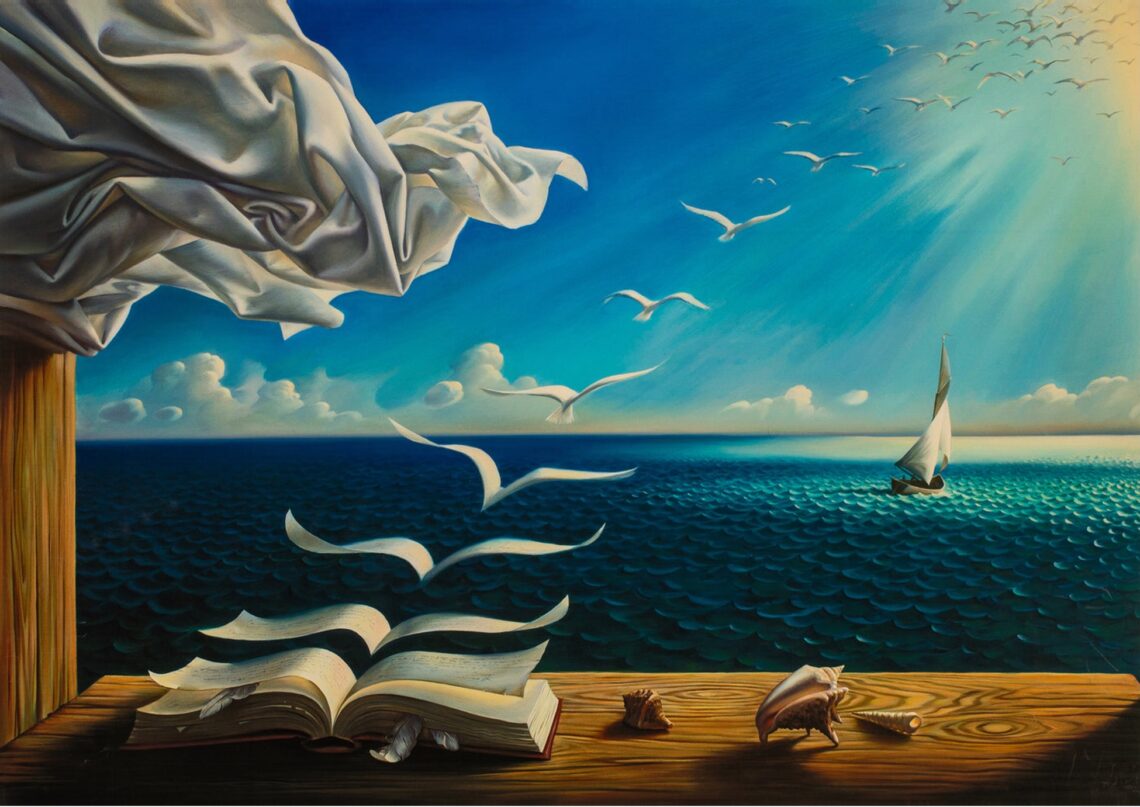
Moby Dick and The Awakening both emphasize the power of a natural force that is
mundane as it is magical – the water. Due to their desire to meditate and muse, Ishmael and
Edna’s journeys in both novels are irrevocably tied to the water, for better or for worse. More
often than human beings would believe, the most significant and helpful recourse to remain
in touch with themselves and the world is to stop and think – to meditate. However, it can be
difficult or against one’s force of habit to do so, especially when it seems so far removed
from the environment of the land – let alone of the fast paced nature of a city like New
Orleans or Manhattan, where Edna was before Grand Isle and where Ishmael was before the
Pequod. When it comes to the sea, though, as Melville puts it, “as everyone knows,
meditation and water are wedded for ever” (Melville 17). But why is that, and where does it
come from? How do meditative, musing, arguably passive characters like Ishmael and Edna’s
relationship with the sea differ from their foils and counterparts, such as Ahab and Adele?
Moreover, does this relationship with the water ultimately benefit Ishmael and Edna by
awakening and transforming them, or does it drive them into madness and irreality?
Considering this through the lens of Darwinism and self actualization, perhaps this meditative
transformation, regardless of whether it is more beneficial or harmful, is inevitable.
ETYMOLOGY OF MEDITATION
Meditation is defined in the Oxford English Dictionary as “the action or
practice of profound spiritual or religious reflection or contemplation” (Oxford
English Dictionary). It originates from old French and Latin in the 13th century. The
meaning of meditation itself has always remained relatively similar or the same, an
imprecise vehicle to discuss general profound thought and musing that may refer to
religious and cultural traditions, but not necessarily. The “med” bit of meditation is a
common root of latin words, including “mederi”
, which means heal. This suggests a
root connection between the concept of meditation and the concept of healing, perhaps
pointing to why humans often feel motivated to meditate in the first place. Without
that ability to reflect and contemplate the world, life altering events, and one’s
feelings, healing from what has happened to us and what holds us back becomes far
less plausible.
In Melville’s Moby Dick and Chopin’s The Awakening, Ishmael and Edna are
both musing and retrospective protagonists who desire to escape from their lives and
into another world, namely one that is tied to or exists within the water. For Ishmael,
this is fully being at sea in the Pequod, abandoning his life on land completely. For
Edna, it is her summer in Grand Isle, where she is constantly by the sea and despite
her initial fear of swimming, always finds herself doing so. Since there seems to be a
connection in both characters’ meditative nature and their willingness to seek after the
water, what exactly is that connection – and hence the connection between water and
healing? If this is the case, considering the tumultuous journeys both protagonist’s
undergo, are meditation and water as capable of being as harmful as they are of
healing, and what might this suggest about human nature?
DARWINISM
In order to understand Melville and Chopin’s portrayals of humans and nature through
Moby Dick and The Awakening, it is important to consider Darwin’s ideas on such matters.
While Darwin’s work was released after Moby Dick, both authors’ novels are often compared
to or analyzed through the perspective of Darwinism. The main aspects of Darwinian thought
are natural selection and the competitive struggle to exist and thrive, given that nature is an
indifferent, savage force that makes each individual seem like an insignificant spec in
comparison. Such themes are important to Edna and Ishmael’s characters, especially in terms
of their meditative qualities and the paths that lead them down.
(The Hornet Magazine)
At the beginning of the novel, Ishmael’s desire to board the Pequod and hunt a whale
– as someone who has never done so before, may be interpreted as as a human’s desire to feel
bigger than he really is, a “man’s will to violate the natural garden” (Bender 28). By
conquering the whale, a creature that in large part represents the state of the world before
humans, Ishmael’s desire to feel purposeful and infinite is suggested. However, as the novel
goes on, it is in fact Ahab who takes on this role as the conquistador who wishes to violate
Darwin’s natural order, and it is Ishmael who becomes an increasingly passive, meditative
character who survives the ocean’s indifferent brutal nature while Ahab does not. It becomes
clear that the novel Moby Dick does not center around a traditional pursuit of knowledge,
rather the idea “that meditation and water are wedded in a monistic universe. […] As a quest
for knowledge, Moby-Dick ends where, from Melville’s point of view, any such voyage of
mind must end: where it begins, in his belief that we can never ‘grasp’ the mystery of life.”
(Bender 32). Hence, Ishmael and Melville (depending on who’s narrating in a chapter) are
progressively humbled by the ocean, as Pip was when he fell overboard. However, this
understanding of the world causes Pip to go mad, suggesting what fully grasping the extent of
nature’s indifference can do to human beings, who are naturally inclined to control and act
against forces that cannot be stopped, such as death and change.
Thus, as Ishmael subtly accepts his place in nature as a human, his “passiveness is his
essential quality as the ultimate ‘water-gazer’ [and] his survival […] is an expression of
Melville’s confidence that in meditation he might achieve the ideal state of
ocean-receptiveness” (Bender 33). As Bender points out, Ishmael being the Pequod’s sole
survivor highlights the importance of his character, similar to Edna, being a water gazer.
When Ishmael introduces himself to the reader, he seems the epitome of an active, forceful
voice, first telling us to call him Ishmael. As the novel progresses, not only are some chapters
in third person, but the ones still in first person seem increasingly passive, and center less
around Ishmael’s internal story and are more externally focused. Like the historical figure
Ishmael who is exiled from his family, it seems that the supposed hero in Moby Dick,
Ishmael, is exiled from his own story. His journey from a protagonist who wants to disrupt
his life to a dwindling character in the background who seems to be spiritually taken or
mesmerised by nature and musing is ultimately what saves him in the end. He internalizes
Darwinian notions of the lack of control humans have over their lives and the world, hence
his reluctance to uphold the role of the story’s hero represents an increasing lack of of desire
to use his free will and act, rather submitting to nature’s order and determinism, accepting his
powerlessness.
Similarly, Darwinian thought in The Awakening leads Edna to realize the patriarchal
society she was born into is a limiting factor she has no control over, leading her to
intentionally drown in the sea, giving up on a reconciliation between external limiting social
factors and her internal desires and ambitions as a woman. Kate’s Chopin’s thoughts on
Darwin were complex, since she disagreed with his “views on women, even as she revered
him” (Bender 186). His belief that women were in some ways inferior to men reflects the
patriarchal values of Edna’s world, which even in Grand Isle, even with the man she loves,
even when painting, cannot be escaped. Her summer of meditation and contemplation, a
literal awakening to identity and her desires, leads her to realize how unsatisfied she is with
her life – namely her marriage and imposed role as a mother. This similarly to Moby Dick
emphasizes the tensions between human desire to disrupt or control and the determinism of
nature or society. However, Ishmael is able to assuage this tension, while Edna cannot, rather
resorting to attaining freedom in the one way she feels she can – by dying in the water. In
both novels, the ocean represents the grand scheme of things, which according to Darwin,
equates humans to powerless specs of dust. Ishmael and Edna’s meditative characteristics as
water gazers cause them to realize this, and while Ishmael grapples with it and survives, Edna
realizes how much it limits her, to the point of never being able to attain all that she needs to
be happy.
AHAB & ADELE
Foiling Ishmael and Edna’s meditative, retrospective characteristics are Ahab and
Adele, who represent opposing ideologies. First, Captain Ahab is a conquistador who never
makes peace with his lost leg, and never lets go of his revenge quest to hunt the whale. As
reflected in his constant outbursts, he wishes “Death to Moby Dick! God hunt us all, if we do
not hunt Moby Dick to his death!” (Melville 135), highlighting his willingness to descend
into mutually assured destruction. His grievance of loss of his leg is a symbol for human
fragility, and the whale as the cause is a symbol of nature’s indifference. It is almost as
comical as it is depressing how angry he feels towards the creature of the whale, who reflects
the vastness of nature and the sea, everchanging and indifferent towards everything –
including Ahab. His constant lack of self knowledge and awareness leads to his demise.
Unlike Ishmael, the concept of nature’s indifference regardless of an individual’s will is not a
tension he is able to reconcile, and he dies in the quest to control nature and change an
outcome that he cannot. What nature can give it can also take – meaning all that humans
have.
(Augustus Shute)
His arrogance and blindness of grief and anger cause him to reject meditation, rather
exercising will, force, and a facade of dominance over nature to the extent of not realizing the
lack of sanity of his actions. While Ahab, like Ishmael, is susceptible to human inclination
towards the water, Ishmael begins to contemplate and meditate this inclination, perceiving it
– and hence nature – as infinitely bigger than himself. Conversely, Ahab resents this
inclination, his desires rooted in destruction, vengeance, and hyperfocus on temporary bodily
abilities. The novel’s allusions to Plato, who had opposite views of the body and soul,
foreshadow Ahab’s punishment. For example, Ishmael says “we have hugely mistaken this
matter of Life and Death […] we are too much like oysters observing the sun through the
water” (Melville 42), the latter part of the quote referring to the cave in Plato’s republic, as
pointed out in a footnote on the page. This idea of the body being the prison of the soul, or at
least a limiting factor, is a recurring notion in Plato’s works, and emphasizes the importance
of meditation to Ishmael’s survival at the end. While Darwinism suggests nature’s
unpredictability, the idea of the soul is what can provide meaning, but Ahab is not in tune
with himself emotionally or spiritually – he is not meditative nor passive enough to be.
This lack of spiritual awareness similarly holds back Adele from Edna’s level of
meditativeness. while Adele’s lack of meditative characteristics reflects her unwillingness to
acknowledge aspects of her life she feels unfulfilled by. While she may seem like the perfect
wife and mother on the surface, it is because by not meditating, she is able to live in
ignorance and fulfill her allocated role in society. As Edna’s role as a wife and mother begin
to fall apart, Adele advises her to “Think of the children. Edna. Oh think of the children!
Remember them!” (Chopin 111), emphasizing that Adele’s priorities always lie in what is
societally imposed – for a woman to always think of the children – rather than to think of
herself, which is what Edna spends most of the summer doing. Not only does Edna claim she
would not give herself up for her children, a point of conflict between the two, but she also
detaches herself from the concept of mindless action, which Adele seems to immerse herself
in, possibly because she fears meditation leading her to realize her dissatisfaction in life.
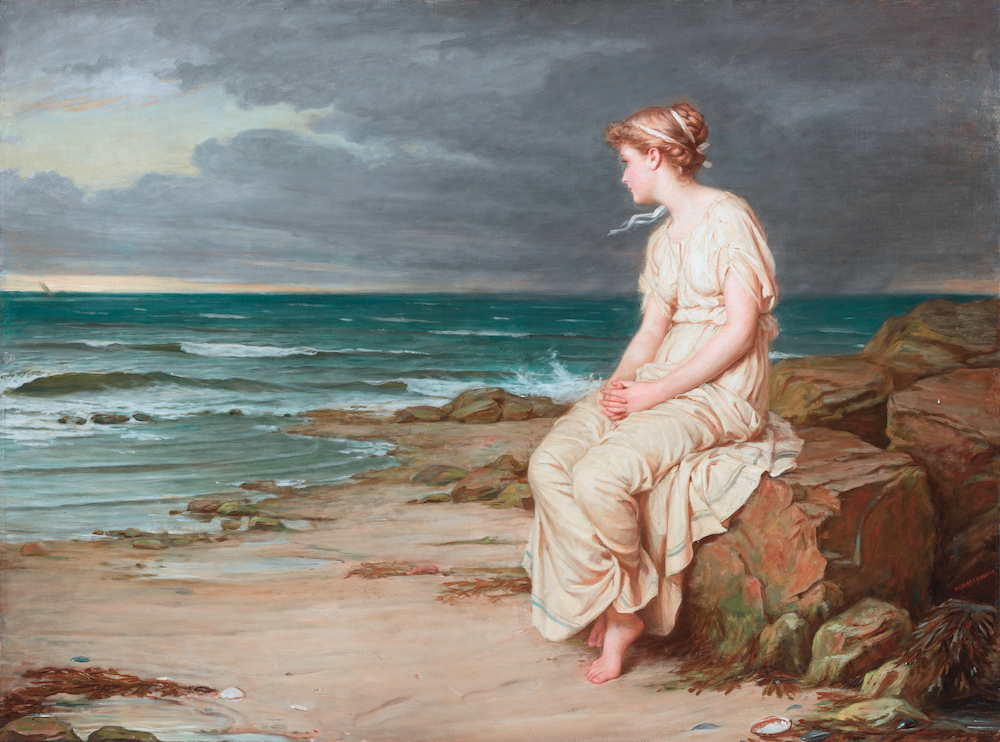
Edna, opposite Adele, feels that “all sense of reality had gone out of her life; she had
abandoned herself to Fate, and awaited the consequences with indifference” (Chopin 105).
This increasingly reckless behavior from Edna reflects the existential crisis she finds herself
in, one rooted in Darwinian ideas such as nature’s, and hence societal indifference (in this
case towards women). Unlike Adele, Edna has begun to “realize her position in the universe
as a human being, and to recognize her relations as an individual to the world within and
about her.” (Chopin 16). Hence, Edna’s meditative characteristics, like Ishmael, cause her to
contemplate her true place in the world, as she realizes her responsibilities are as empty as
they are imposed, and she is as small as she is free. This also reflects in her increasing
inclination to the sea, which is “seductive […] inviting the soul to wander for a spell in
abysses of solitude; to lose itself in mazes of inward contemplation” (Chopin 16). Inward
contemplation and solitude exemplify the concept of meditation, which, while that awakens
Edna, it resultantly sends her down a life ending spiral, as she realizes the extent of her
unhappiness.
(Jessica Clark)
Adele never reaches this point, she is the perfect wife and mother on the surface as
she refuses to unabashedly meditate on her life – her ignorance and refusal to awaken enables
to fulfill her roles in society. This is suggested when, in response to Edna’s refusal to give the
essential, herself, up for her children, Adele responds “I don’t know what you could call the
essential, or what you mean by the unessential” (Chopin 49). Her inability to understand what
Edna means suggests she is not in touch with or aware of what is important to her, as her
reluctance to meditate reflects a reluctance to awaken as Edna does. This ignorance
surrounding her identity and ambitions means she does not physically lose her life as Edna
did, but it does not seem there was emotionally and spiritually a life to lose – considering her
roles were already determined for her by nature and society.
CONCLUSION
Ultimately, meditation in both novels has served as a vehicle for self actualization –
both on the Pequod and in Grand Isle. Edna’s character thus suggests that the perilousness of
meditation and human inclination to water is rooted in the consequences of self-actualization,
where one cannot be unhappy without realizing they are unhappy. In that way, Adele’s lack of
awareness protects her from Edna’s self destructive spiral. However, in Moby Dick, Ishmael’s
self actualization, which is rooted in decentering himself, leads to his survival on the Pequod,
rather than the conquistador Captain Ahab. Ishmael’s ability to meditate and be passive is
rewarded by nature, embracing his role in the world. Edna, contrastingly, resists her role in
the world, leading to her decision not to adapt to unjust determinism, but escape it. Both
meditative water gazers, however, represent the tensions between human ambition or freedom
with nature’s indifferent vastness, grappling with a sense of lost purpose, identity, and fate.
Hence, the connection between water and meditation is rooted in such Darwinian tensions, as
contemplating one’s place in the grand scheme of nature is as perilous and daunting as it is
necessary and humbling. It is only by grappling with such tensions that one can begin to
understand themself – for better or for worse.
