One of the primary discourses between environmental scholars today centers around how
humankind interacts with the beyond-human world, with many critiquing how humans perceive
the natural world as inanimate and devoid of intrinsic value. However, as with most things,
literature and literary worlds complicate this idea, as ecocritics are uncovering and analyzing
how texts imbue the natural world with sentience and animacy. Yet, the standards for who and
what is granted animacy or perceived as animate in literature and society can vary drastically
between languages and cultures, especially between Indigenous languages, many of which are
considered “verb-based,” and English, which is more noun-based, meaning that English speakers
perceive and experience less animacy in the world of which we are but a small part. Furthermore,
much of the conversation surrounding the animacy of the beyond-human world centers around
the land and terrestrial animals. However, with the emergence of the Blue Humanities comes a
call for investigating animate representations of the sea and its inhabitants, looking to American
works that have become integral examples of the sea narrative, such as Melville’ s Moby-Dick and
Chopin’s The Awakening as well as Indigenous origin stories, especially those of the Moa Nui
peoples, for whom the ocean has remained a foundational part of their identities and ways of life.
In comparing English-written works with that of the Moana Nui peoples, a striking contrast
comes into view: English speakers have lost the capacity to or refuse accurate animate depictions
of the sea and its inhabitants while many Indigenous peoples continue to interact with and
perceive the oceanic world as innately animate. In Eurowestern literary texts, such as Moby-Dick
and The Awakening, and perspectives, the animacy of the beyond-human is tied to
humankind—and therefore anthropocentric—whereas, with Indigenous perspectives, specifically
that of the Tongan peoples, the animacy of beyond-human is inherent. This contrast ultimately
demonstrates the anthropocentric mindset of the Eurowestern world when representing the
non-human while advocating for the need to center Indigenous literatures to regain an animate
way of perceiving the natural world in Eurowestern culture and society.
To examine how the animacy of the non-human functions in various sea narratives of the
Eurowestern world, it is essential first to establish how the meaning of the word animacy has
changed over time and to what or whom it has applied as it has grown in usage Moreover, in
investigating how animacy has evolved over time and has multiple meanings and usages one can
recognize it in literary texts and conduct more complex readings through examining how it
functions differently across narratives, languages, cultures, and histories. As a concept and term,
animacy is multifaceted, serving as both a noun and a grammatical or semantic feature in
English. Moreover, animacy’s dynamic and complex nature allows it to transcend across multiple
genres, histories, geographies, and linguistic facets of the English language. According to the
Oxford English Dictionary, the current standard definition for “animacy” as a noun is “The
quality or condition of being alive or animate; animate existence; an instance of this”(“Animacy,
N., Sense 1.”). This definition of animacy stems from the etymon “animate,” a verb and adjective
that originates from the Latin term animatus, which means “to endow with a particular spirit, to
give courage to, enliven”(“Animate (v).”). Of course, animatus is derived from the Latin term
anima, meaning ‘soul, breath’’(“Animate.”) It is critical to provide the etymology of these two
terms as precursors to animacy because the term animacy in this analysis of sea narratives
extends beyond the quality of simply being alive and also indicates sentience and an emotional
or intellectual energy, which the original derivations of animate—“spirit,” and “soul,” indicate.
The first recorded use of the term “animacy” as a noun occurred in 1871 and was applied
strictly to human beings as author J. H. B. Browne used it to denote the legal aspects of insanity
in medicine. In his book The Medical Jurisprudence of Insanity, Browne states that “moral
notions would be coextensive with animacy”(“Animacy, N., Sense 1.”), suggesting that a
fundamental belief and understanding of what is considered right versus wrong is an innate
quality of an animate or sentient being, in this case, referring specifically to human beings alone.
However, over the next 130 years, the meaning of animacy extended to include non-human
beings, such as when author E.L. Doctorow used it in his 1989 novel Billy Bathgate, in which the
titular character explains, “It [sc. water] was drawing in my imagination a portrait of its
mysterious, powerful, and endlessly vast animacy right there under the boat I was
riding”(“Animacy, N., Sense 1.”). This employment of the term marks a significant turning point
in meaning and inclusion, as not only does Doctorow describe non-human animals with an
“endlessly vast animacy,” emphasizing that the non-human has a sentience and soul, but his
usage also centers around the sea as a space that possesses animate beings as the character
considers the life underneath his boat. Still, it is crucial to understand that, at this point, it is not
the water itself that possesses animacy but that there are animate beings within it, still limiting
the term to humans and animals only.
As a grammatical and semantic feature of the English language, animacy serves as a
means of classification, expressing how sentient or alive the referent of a noun is, making
animacy one of the most basic principles shaping the English language. The definition of
animacy in a grammatical context is slightly different from that of the nominal form, with the
Oxford English Dictionary defining it as “The fact or quality of denoting a living thing;
classification or ranking of words or their referents on this basis”(“Animacy, N., Sense 2.”)
When used as a grammatical concept, animacy serves as a quality prescribed to various beings,
with some being “rank[ed]” as more animate than others via sentence structure, grammar
constructions, and others linguistic choices. In English, animacy influences grammar primarily
through pronoun selection: entities considered more “animate” are typically referred to with
pronouns like “he” or “she,” while animals or things that are considered less animate by the
speaker are referred to with “it,” demonstrating a subtle grammatical distinction based on how
sentient something is perceived to be. Additionally, possessive constructions are also impacted
by the level of animacy, with perceived higher animacy leading to a preference for the
apostrophe S (’s) construction (e.g., “the woman’s book”) over the “of-phrase” construction (e.g.,
“the book of the woman”). Cambridge Dictionary, which defines animacy as “the quality in a
noun of referring to something animate (= a living being)”(“Animacy”), also demonstrates how
levels of animacy in the English language impact sentence structure, stating that “Animacy and
agency are linked in English; for example, sentences such as “The man kicked the ball” are more
frequent than sentences such as “The ladder hit the man.”(“Animacy”). Therefore, when
considering animacy as a linguistic feature, the term is used to create a sense of hierarchy among
living things, specifically between humans, animals, and objects, adding a new layer of
complexity regarding not only who or what is animate, but who or what is more or less animate,
with humans remaining in the superior position. In fact, the human need to classify and
categorize animacy extends beyond the English language:
Most, if not all, of the world’s languages exhibit ‘animacy effects,’
whereby grammatical structures interact with the relative
conceptual animacy of nominal referents. Animacy is taken to be
represented on hierarchies or scales of varying degrees of
granularity, with human discourse participants at one end and
inanimate and abstract referents at the other” (Nelson and Viham
260).
Therefore, animacy as a grammatical and semantic feature extends beyond Engish, permeating
“most, if not all” languages. Animacy as a feature of language concerning species hierarchies
emerged in a 1979 edition of Language, a prominent academic journal in the field of linguistics:
“Then higher animals such as dogs, and on down the scale of animacy until inanimate
participants are reached.”(“Animacy, N., Sense 2.”).Here, animacy extends beyond
differentiating between humans and animals, as the author presents an animacy scale for
non-human animals, in which those animals in closer proximity to humans (such as dogs) are
classified as more animate or higher on the scale, continuing downward to “inanimate
participants,” which are not specified but could refer to those most removed from humans like
the inhabitants of the sea. Through these varying uses and contexts, one can see the complex
history of animacy, evolving slowly to extend to non-human animals of land and, rarely, the sea.
However, one constant seen across examples is that this term as a noun and a semantic feature
derives from the English-speaking human experience and perception alone, meaning that
humankind remains the central focus and, therefore, is always considered to be the most alive
and sentient creature of all to the point that the animacy of the non-human, is tied to proximity or
usefulness to humankind in both literature and society. However, as this critical analysis will
reveal, not all languages feature the same hierarchical structures in which humans remain
superior in terms of animacy.
Regarding animacy and the Blue Humanities, only one of these usages mentions marine
life and still fails to discuss specific animals while excluding the sea and other natural forces
within the animate classification entirely. However, this does not mean that the ocean and its
many inhabitants are not depicted as animate in Eurowestern literature. Animate portrayals of the
whale and the sea itself are key features of Melville’s Moby-Dick and Chopin’s The Awakening,
both pivotal works in Blue Humanities discourses, written in the 19th century. Still, as this
critical analysis will uncover, in both texts, the animacy of the non-human in English texts
(meaning works written in English) is a privilege given by authors and human characters to the
other-than-human as a means of reflecting human thoughts, desires, and societal conflicts or
changes of the time.
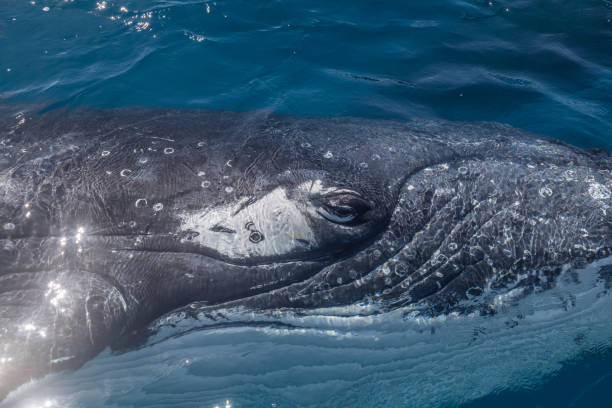
In Melville’s Moby-Dick,whales are imbued with sentience and animacy. However, their
animacy only serves to indirectly address 19th-century scientific debates and sociological
discourses, exposing Melville’s human-centric depiction that reflects the anthropocentric
paradigm of the Eurowestern world during the 19th century and today. Throughout the novel,
whales are characterized as animate beings, from Captain Ahab giving the white whale a proper
name, Moby-Dick, and constantly referring to the whale with the pronoun “he,” to Ishmael’s
up-close encounter with a group of mother whales in chapter 87 “The Great Armada,” in which
he states, “Floating on their sides, the mothers also seemed quietly eyeing us” (Melville 290).
This passage challenges the idea that humans are only beings able to observe, suggesting that
animals are also perceptive beings as Ishmael notes that he is being “ey[ed]” or contemplated by
the pod of the mother whales while their calves approach the whaling boat and swim nearby. In
this brief moment, Ishmael understands that he is being perceived as the “animal” to the mother
whale, suggesting that he understands that the whale, like him, possesses emotional or
intellectual energy, and, therefore, animacy. However, Melville only bestows the whales with
animacy to establish them as complex organisms that elude precise classification, which allows
him to use the whales’ animacy to discuss issues of interest in 19th-century America.
A prime example of this human-driven animacy appears in the novel’s “Cetology”
chapter, during which Ishmael’s inability to describe or categorize the whales accurately
functions as a tool for Melville to address the debate on new taxonomies and human
exceptionalism, a contentious issue of the 19th century. At the beginning of the chapter, Ishmael
declares, “A whale is a spouting fish with a horizontal tail. There you have him”(Melville 111).
Again, Ishmael animates the whale through the pronoun “him,”1 setting up the discussion to
follow with the understanding that the whale possesses a form of sentience. However, regarding
his classification of the whale, Melville creates a striking inconsistency because whales are not
fish but mammals, and, as author Michaela Castellanos points out in her article “‘Constituents of
a Chaos’: Whale Bodies and the Zoopoetics of Moby-Dick,” “this was already an established
notion at the time Moby-Dick was written”(Castellanos 129) and that “Ishmael even explicitly
acknowledges this by remarking that Linnaeus, in his System of Nature, declared whales
1 It could be argued that referring to whales with personal pronouns was standard practice among whalers; however,
this was often only done with feminine pronouns, such as the common phrase “There she blows!” Therefore,
referring to the whale as “him,
” is another instance of Melville providing an animate characterization of whales in
the novel.
separate from the fish”(129). It can be argued, then, that Melville situates the whale as a complex
organism that Ishmael is unable or unwilling to accurately characterize in order to reflect the
debate in the 19th surrounding Linnaeus’s Mammalia taxonomy, which called into question the
idea that humans are superior beings because Linneaus placed whales into the same category as
human beings. As Castellanos reveals, this discourse “dominated the United States in the first
half of the nineteenth century, and it was full of passionate disagreements over taxonomic
classification and its potentially unsettling implications about the place of man in the order of
nature”(130). Melville takes part in this discourse through Ishmael’s his conflicting depiction of
the whale as both a fish and an animate “him.” While declaring that a whale is merely a fish
maintains the idea that whales are not mammals and therefore, not within the same taxonomy of
humans, referring to the whale as “him,” uses the same pronouns one would to address another
human and establishes whales as animate beings like humans. This dual depiction, then, directly
mimics the discourse of 19th-century Americans, with one side refusing to acknowledge the
similarities between humans and whales despite Linnaeus’s publication and the other accepting
the establishment of the Mammalia taxonomy that included both humans and whales, which
challenged the idea that humans are superior to all other animals. Therefore, although Melville
imbues his literary whales with animacy throughout the novel, their animacy only serves as a
means of reflecting one side of this debate: whales are, in fact, similar to human beings and
possess some of the same sentience or awareness. In effect, Melville’s animate portrayal of the
whales is still tied to humankind and, in turn, anthropocentric because their animacy only exists
or functions to replicate discourses happening in human society at the time.
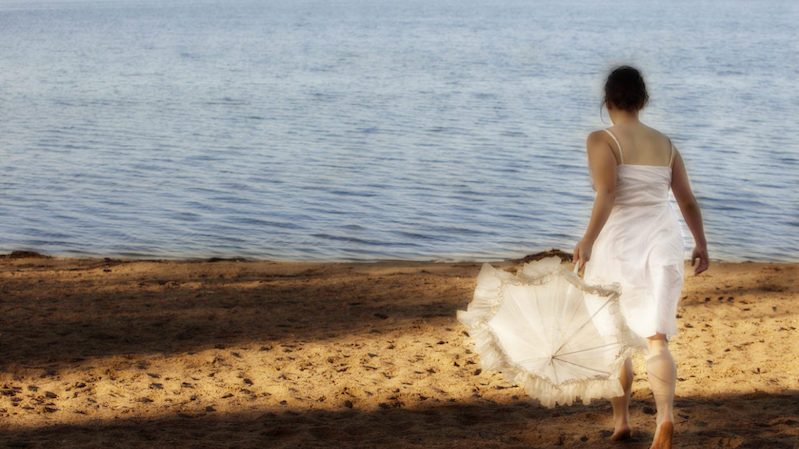
Chopin’s The Awakening takes animacy a step further than Moby-Dick, extending beyond
animals and into natural forces; in this novel, the sea itself is animate. However, like Moby-Dick,
the sea’s animacy is neither inherent nor independent of human characters, lending itself solely
to reflect Edna’s unconscious mind and desires. Again, this quality of the sea’s animacy
demonstrates how, in Eurowestern societies, the animacy of the other-than-human relies upon its
ability to represent a facet of human life and culture. At the beginning and end of the novel,
Chopin repeats the same poetic prose in which she refers to the “voice” of the sea: “The voice of
the sea is seductive, never ceasing, whispering, clamoring, murmuring, inviting the soul to
wander in abysses of solitude”(Chopin 16 and 116). By endowing the sea with a voice that
permeates the novel’s plot, Chopin injects it with life and nuance, transforming it from a setting
upon which the novel’s events play out to an active participant in Edna’s investigation of self,
much like how the other human characters like Robert and Mademoiselle Riesz use their voice
and opinions to influence Edna’s choices. However, the sea’s “voice,” and therefore its animacy,
is ultimately symbolic of Edna’s repressed desires and the human unconscious as a whole. First,
the sea’s voice only arises at two pivotal points in the novel: when Edna “was beginning to
realize her position in the universe”(16) and just before she decides to end her life. This feature
underscores the direct link between the sea’s ability to speak and Edna’s mental state.
Furthermore, the sea is characterized by a soft quietness and repression through words such as
“whispering,” “clamoring,” and “murmuring,” and Chopin connects the sea to an image of
“abysses of solitude,” highlighting it as a place of remoteness that one cannot easily reach or
understand. The secretive, dull diction, in combination with secluded imagery, evokes the exact
characterization as that given to the human unconscious, in this case, Edna’s, as the emotions and
memories held in the abysmal caverns of the unconscious mind are blocked out and repressed.
Therefore, while the sea is animated through its voice, this animacy only exists so that the sea
mimics the human subconscious, in this case, Edna’s, meaning its animacy is linked to human
desire and motive.
Moreover, throughout the novel, Edna experiences feelings of alienation and
discontentment, as she is unable to find satisfaction within the constraints of womanhood
established by a 19th-century patriarchal society in Louisiana as upper-class, White Creole
women were relegated solely to domestic duties as wives, mothers, and socialites. Edna’s
rejection of these expectations manifests as sudden and chaotic actions, such as abandoning her
wifely duties, moving into her own apartment, and having affairs with Arobin and Robert. Edna
can also never definitively explain why these changes within her have occurred, as she never
directly addresses how or why she has little interest in embodying the ideal mother and wife like
other women in her circle. Instead, it seems that, like the voice of the sea, the reasoning behind
these changes emerges as murmurings and whispers, just as repressed memories and emotions
seem to bubble up from the depths of the unconscious in slight yet sudden moments. In effect,
the voice of the sea serves as a physical representation of Edna’s subconscious desires and
rejection of 19-century societal expectations, tying the sea’s animacy directly to her character,
just as the whales’ animacy in Moby-Dick serves as a means of addressing contentious scientific
debates in 19th-century society. Ultimately, The Awakening provides another example in which
Eurowestern literature and the English language cannot or simply do not want to project the sea
and its inhabitants as inherently animate. Instead, any animacy is always used to reflect aspects
of human society at the time of publication.
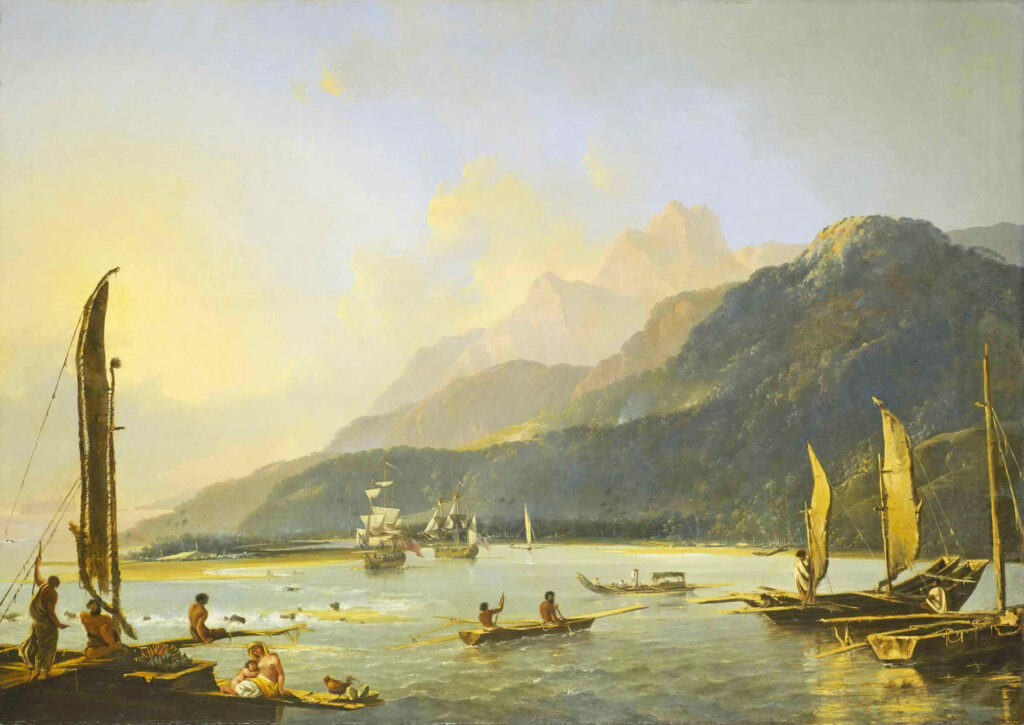
In stark contrast, Tongan scholar and author Tēvita O Ka‘ili’s discussion of Moana Nui
histories in his article “Ancestral Voices of the Sea” reveals how, in Indigenous cultures, such as
that of the Tongan people, the sea is imbued with an inherent animacy independent from
humankind. Ka’ili’s discussion of the sea centers around the Tongan Creation Story, and he
begins his piece with an original song written in English and Tongan based on this history: “The
Ocean is our original ancestor/ Seaweed and Sea Sediment, our /progenitors (Ka’ili 707). By
capitalizing “The Ocean,” “Seaweed,” and “Sea Sediment,” the sea and sealife are immediately
individualized and animated as capitalized names are primarily reserved for proper nouns, which
include specific people, places, and single entities. This animation is strengthened by
characterizing the sea as “our original ancestor,” drawing an intimate familial relationship
between the sea and the Tongan people. Like in Chopin’s novel, there is a clear connection and
relationship between the sea and humans, in this case, the people of Moana Nui. Moreover, one
could argue that Ka’ili and the people of Moana Nui are merely anthropomorphizing the sea,
which would also present an anthropocentric animacy. However, the stark difference between the
animacy in the Tongan creation story and that in The Awakening and Moby-Dick is that the
ocean’s sentience is not reliant upon humankind, nor does its animacy function to present
humanist debates in Tongan society. Rather, the Ocean, Limu (Seaweed), and Kele (Sea
Sediment) (709) are described as “primordial ancestors,” meaning their animacy is separate from
and predates the people as “primordial” indicates existence at or from the beginning of time.
Ka’ili highlights this distinction by referencing Epeli Hauʻofa, writing, “In his words,
‘conquerors come, conquerors go, the ocean remains’”(710), establishing the ocean’s animacy as
a quality that will outlast humans, too. Whereas in The Awakening and Moby-Dick, the animacy
of the natural world is a vehicle for human conflict and arises only in such moments, to Ka’ili
and the Tongan people, the ocean’s sentience precedes the human “conquerer” and will remain
after we “go,” establishing animacy and sentience as inextricable qualities of the sea. This
characterization, in turn, highlights the striking contrast between Indigenous and Eurowestern
relationships with the sea, as the former is founded on respect and community while the latter is
transactional and prioritizes the human perspective. Moreover, this contrast in animate depictions
of the natural world emphasizes linguistic differences between English and Tongan, further
solidifying how anthropocentric and ecocentric perspectives permeate all aspects of one’s way of
life, including language.
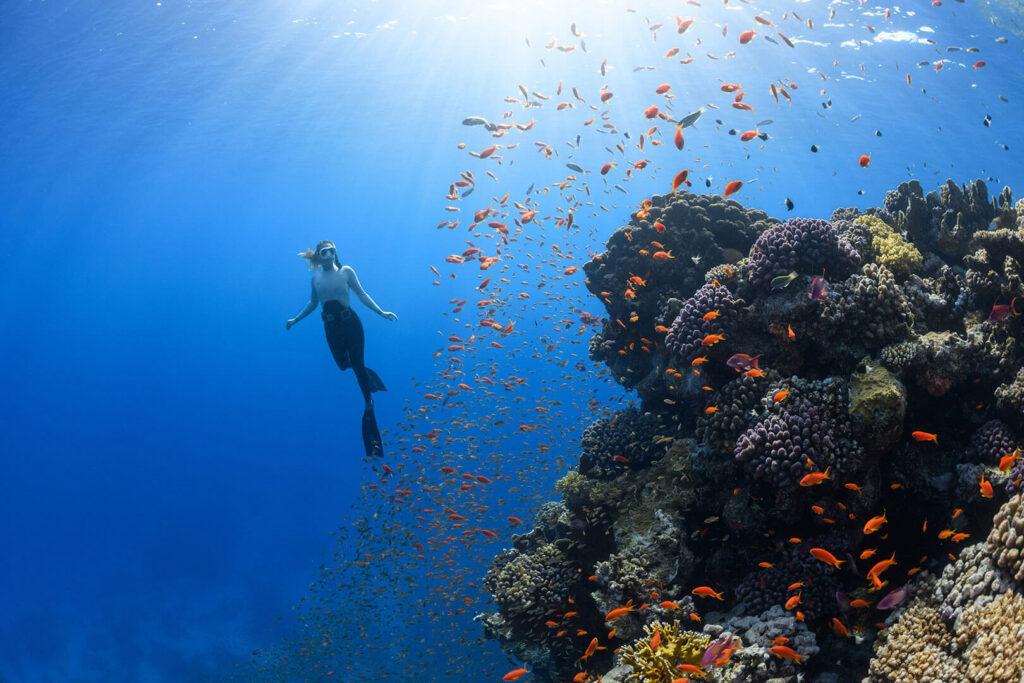
Ka’ili’s article and the people’s origin story are just two of several examples of
Indigenous histories and texts that reflect how the beyond-human world is experienced and
perceived as innately animate by Indigenous peoples. In fact, in many Indigenous languages,
animacy of the natural world is ingrained into their grammatical structures, posing another
contrast to the grammar of the English language. Annishaabe and Potawatomi author Robin Wall
Kimmerer describes this practice as “the grammar of animacy”(Kimmerer 55) in her book
Braiding Sweetgrass. Providing an example, Kimmerer refers to the Anishinaabe word
Puhpowee, which she translates as “the force which causes mushrooms to push from the earth
overnight”(49). This single word encapsulates an entire process, a grammatical and semantic
feature that does not exist in English despite being considered the language of science to many.
Kimmerer also details how the Potawatomi grammar is intrinsically linked to their worldview,
stating, “In Potawatomi, this grammar of animacy means that we have the linguistic structure to
speak of the living world as if it were alive as if it was a person as if it were our family- because
in our way of thinking, it is”(55). In Potawatomi and many other Indigenous languages, this
grammar of animacy stems from how Indigenous peoples interact with the beyond-human world,
seeing and experiencing it as animate, sentient, and deserving of the same grammatical
classification given to humans.
In Potawatomi, this grammar of animacy also extends to seascapes and various bodies of
water, as Kimmerer discusses how the English noun “stream” only exists as the verb “to be a
stream” in her language. She explains this is because “ the water is alive, and it conveys that the
world is alive and dynamic and always changing, and so a stream is not a static thing. It is a way
of being”(56). The Potawatomi language conveys a world in motion, reflecting the way in which
Indigenous peoples perceive the beyond-human, even natural forces like water, as being innately
animate beings. Additionally, the Potawatomi’s grammar of animacy does not possess the same
hierarchical structures in English, with all natural beings and forces presented with the same
level of animacy in their sentence constructions. Kimmerer and Ka’ili’s work, as well as the
origin story of the Tongan people, not only stand in opposition to the human-centric animacy of
the whale and sea in Melville and Chopin’s novels but also deconstruct the prestigiousness of the
English language by exposing how English grammar and semantics cannot accurately capture the
movement and life within the natural world. Rather English is relegated to a noun-based,
stagnant existence regarding how humans experience life and relationships with animals, plants,
and the sea itself.
Animacy appears and functions in vastly different fashions between Eurowestern and
Indigenous texts, reflecting opposing ideas about the connection between humankind and
seascapes. As demonstrated in Moby-Dick and The Awakening, in Eurowestern literature and
society, animacy is a privilege given by humankind to the other-than-human to reflect human
thoughts, desires, and societal conflicts of the time. In contrast, Kimmerer, Ka’ili, and the
creation story of the Tonga people express how Indigenous communities perceive and present the
sea and its inhabitants as inherently animate, a foundational part of their ideologies and lifestyles.
Nevertheless, the question remains: how can the Eurowestern world follow suit, changing how
we interact with the sea and its inhabitants? Perhaps the answer lies in fostering a sense of
kinship in the literary world and society that is not based on consumption and the usefulness of
the beyond-human world. As kinship refers to sharing characteristics or origins, the first step in
de-centering a human-centric perception is accepting that humankind and all other inhabitants of
our world share animacy, whether or not it abides by what humans consider animacy to be. It is
also important to establish that this animacy extends to the sea and the beings within it even
though so much of our oceans’ depths are yet to be explored, a notion that many scholars within
the Blue Humanities are already expressing. As Dr. Alan Montroso writes in his article ‘Ocean is
the New East,” “I found solace in the evidence that so many vast and heterogeneous lives can
flourish without the intrusive light of the sun or human reason, and that such animacy is possible
in the darkness”(Montroso 1). Finally, fostering kinship can also begin on a linguistic and literary
level through prioritizing Indigenous histories and texts like those of Ka’ili, Kimmerer, and the
Moana Nui peoples in the study of Blue Humanities as well as centering Kimmerer’s notion of a
grammar of animacy when depicting the natural world in literature, both fiction and factual.
Therefore, in creating this sense of kinship on a linguistic and experience-based level, perhaps
the Eurowestern world can learn to adopt a perspective in which humans, animals, the land, and,
of course, the sea are not just companions that coexist but kin, made from the same material.
Works Cited
“Animacy.” Definition in the Cambridge English Dictionary, Cambridge Dictionary, https://dictionary.cambridge.org/us/dictionary/english/animacy. Accessed 10 Dec. 2024.
“Animacy, N., Sense 1.” Oxford English Dictionary, Oxford UP, July 2023, https://doi.org/10.1093/OED/2574641302.
“Animacy, N., Sense 2.” Oxford English Dictionary, Oxford UP, July 2023, https://doi.org/10.1093/OED/4274081175.
“Animate.” Merriam-Webster, https://www.merriam-webster.com/dictionary/animate#citations. Accessed 10 Dec. 2024.
“Animate (v.).” Etymology of Animate by Etymonline, https://www.etymonline.com/word/animate#etymonline_v_13455. Accessed 10 Dec. 2024.
Book Marks. “The Voice of the Sea Speaks to the Soul: On Kate Chopin’s The Awakening.” Book Marks, 8 Feb. 2022, https://bookmarks.reviews/the-voice-of-the-sea-speaks-to-the-soul-on-kate-chopins-the-awakening/.
Castellanos, Michaela. “‘Constituents of a Chaos’: Whale Bodies and the Zoopoetics of Moby-Dick.” Palgrave Studies in Animals and Literature, Springer International Publishing, 2018, pp. 129–47, https://doi.org/10.1007/978-3-319-64416-5_8.
Chopin, Kate. The Awakening (Third Edition) (Norton Critical Editions). W. W. Norton & Company, 2017.
Engao, Estee Lutte. “The Ocean’s Connection to All Life on Earth.” Plastic Bank, 5 June 2023, https://plasticbank.com/blog/the-oceans-connection-to-all-life-on-earth/.
Ka‘ili, Tēvita O. “Ancestral Voices of the Sea.” The Cambridge History of the Pacific Ocean, Cambridge University Press, 2022, pp. 707–28, https://doi.org/10.1017/9781108226875.037.
Kimmerer, Robin. Braiding Sweetgrass: Indigenous Wisdom, Scientific Knowledge and the Teachings of Plants. Milkweed Editions, 2013.
Melville, Herman. Moby-Dick (Third Edition) (Norton Critical Editions). W. W. Norton & Company, 2018.
“MOANA NUI’S ENVIRONMENTAL MISSION :” Moana Nui | Moana Nui L’odyssée, https://www.moana-nui.org/en/moana-nuis-environmental-mission/. Accessed 10 Dec. 2024.
Montroso, Alan. “Ocean Is the New East.” Punctum Books, vol. 2, 2017. Project Muse.
Thurston, Philip. “354 Whale Eyes Stock Photos, High-Res Pictures, and Images.” Getty Images, https://www.gettyimages.com/photos/whale-eyes. Accessed 10 Dec. 2024.
Vihman, Virve-Anneli, and Diane Nelson. “Effects of Animacy in Grammar and Cognition: Introduction to Special Issue.” Open Linguistics, vol. 5, no. 1, Jan. 2019, pp. 260–67, https://doi.org/10.1515/opli-2019-0015.
